
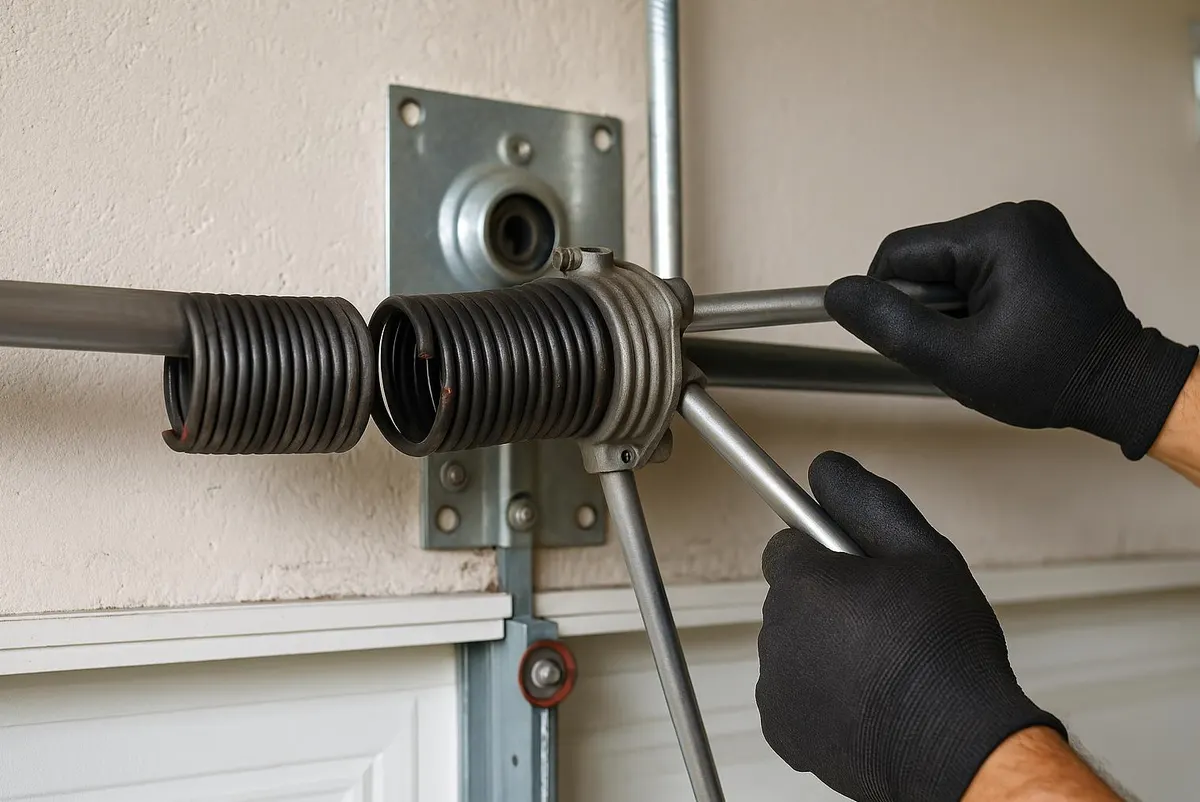
You're backing out for work and the garage door doesn't rise evenly. One side lags, there's a grinding sound like a shopping cart with a bad wheel, and for a split second the whole door shudders like it's going to come off the track. You yell for your spouse. They come out, watch it open fine on the second try, and say you're imagining things. You are not imagining things. You just caught two different parts of your garage door system arguing with each other, and one of them is a lot more dangerous than the other.
Two Different Parts, Two Very Different Problems
A garage door has rollers (the small wheels that ride in the metal track) and cables (the steel lines that run alongside the springs and actually hold the door's weight when it's open). They fail in different ways, make different noises, and carry very different risk levels.
Worn Rollers: Annoying, Rarely Dangerous
Rollers wear out from age, friction, and moisture working into the bearings. In a climate like ours, with humidity most of the year and afternoon downpours that find their way into the garage through gaps under the door, the metal or nylon rollers can swell slightly, pit with surface rust, or just dry out and squeal. Signs you're dealing with worn rollers:
- A rhythmic squeak or grind that happens every time the door cycles, not just once
- The door looks like it's wobbling slightly side to side as it moves, but still opens and closes fully
- Visible flat spots, cracks, or rust on the rollers themselves if you look at the track
- The noise gets worse in humid weather and eases up a little when things dry out
Worn rollers are a maintenance issue. They make the door louder and rougher, and left alone long enough they can jump the track, but they're not going to let the door come crashing down.
Frayed Cables: Annoying Until It's Suddenly Not
Cables are a different story. These steel cables are under constant tension because they're holding the full weight of the door through the spring system. When a cable frays, it's usually from rust (moisture getting into the strands), from rubbing against a misaligned pulley or drum, or simply from age and thousands of open-close cycles. What to watch for:
- Visible fraying, little broken wire strands sticking out like a snapped guitar string, near the bottom bracket or around the drum at the top
- The door hangs slightly crooked, one corner lower than the other, especially noticeable when it's halfway open
- A popping or snapping sound during operation, which can mean a cable has already partially given way
- Rust streaks on the cable or drum, which shows up fast here given how much moisture sits in the air for most of the year
A frayed cable is not a noise problem. It's a structural problem. If it lets go while the door is up, that side of the door drops, sometimes fast and hard, and because the springs are still loaded, the whole door can twist or come off its track. This is the kind of failure that damages vehicles, door panels, and occasionally people standing underneath.
How to Settle the Argument in Your Garage
Here's the quick test you can both do together, from a safe distance, with the door closed and the opener unplugged:
- Look at the rollers in the track. Give the door a light manual push along the track (door closed, no power) and listen for grinding versus a dry squeak. Grinding usually means metal-on-metal wear; a dry squeak often just needs lubrication.
- With the door still closed, look at the cables running from the bottom corners up to the drums near the springs. You're looking for any silvery, frizzy strands poking out, not the smooth, tightly wound cable it should be.
- Check if the door sits level when closed. A visible lean to one side, even a slight one, points toward a cable problem rather than a roller problem.
If it's rollers: this is a reasonable thing to schedule as routine maintenance. If it's cables: stop opening and closing the door until someone qualified looks at it. Don't try to tension or replace a cable yourself, these systems store a surprising amount of force and an amateur repair is one of the more common ways people get hurt working on garage doors.
Why This Shows Up More in Our Weather
Houses around Lochloosa, Hawthorne, Island Grove, and the rest of Alachua County deal with a specific combination: high humidity most of the year, hard afternoon downpours in storm season, and garages that aren't always sealed as tightly as the rest of the house. That moisture works into roller bearings and cable strands over time, speeding up corrosion compared to a drier climate. It's not that the parts are lower quality, it's that they're fighting rust and swelling constantly, which is why a yearly check genuinely matters here more than it might somewhere drier.
When to Call Lochloosa Door & Opener
If you've spotted fraying on a cable, heard a pop, or noticed the door hanging crooked, that's a same-week call, not a someday project. Our Garage Door Cable Repair service replaces worn or frayed cables properly, with the springs safely controlled during the swap, so nothing lets go under tension. If it's rollers grinding and squeaking but the door still runs true, our Garage Door Maintenance & Tune-Up covers roller replacement, track alignment, and lubrication built for our humidity, so you're not back here again in six months.
Either way, you don't have to guess which one you're dealing with. If you're hearing something new out of your garage door, whether it's a squeak, a grind, or a pop, call Lochloosa Door & Opener and we'll tell you straight whether it's a quick fix or something that needs attention now. Serving Lochloosa, Hawthorne, Island Grove, Cross Creek, Citra, Micanopy, Waldo, and Earleton, FL.