
What a Technician Sees on a Storm-Related Call
The call usually comes in the day after a bad blow. A homeowner walks into the garage and finds the door bowed inward like a sail, one track pulled away from the wall, or rollers that won't move because rust has seized them in place. Sometimes it's quieter than that — a panel with a faint ripple down the middle, a bottom seal torn loose, or an opener that stopped responding the moment the power flickered. None of this is dramatic on its own, but it's a pattern we see constantly in this part of Florida: a door that held up fine for years suddenly shows damage after one hard wind event, because moisture and corrosion had already weakened it long before the storm arrived.
Why the Garage Door Is a Home's Weakest Wall
Most exterior walls are solid, continuous, and tied directly into the frame of the house. A garage door is none of those things. It's a large panel of thin material, held in place by tracks, rollers, hinges, and a spring system, with a motor pulling on one point near the center. When wind hits a house, pressure builds on the windward side and pulls on the leeward side. A standard door isn't built to resist that kind of push-pull cycling. Once a door buckles or blows in, the sudden pressure change inside the garage can stress the roof structure above it — which is why wind-rated garage doors and reinforcement kits exist in hurricane-prone regions, and why insurers and builders treat this opening differently from a normal wall section.
Humidity and Salt Air Make It Worse
Hot, humid air sitting in a closed garage for days encourages rust on springs, hinges, and roller shafts. Near the coast, salt air accelerates that corrosion even faster. A spring or hinge that's rusted doesn't fail gracefully — it fails suddenly, often under the extra load of high wind or a hard gust slamming the door against its stops.
Pre-Storm Checklist for This Time of Year
Late in the season, storms can still roll through with real wind behind them, and afternoon downpours haven't fully let up yet. A few focused checks now can prevent a much worse call later:
- Tracks and rollers: Look for rust streaks, flaking metal, or rollers that don't spin freely. A roller that's seized will put uneven strain on the track during wind gusts.
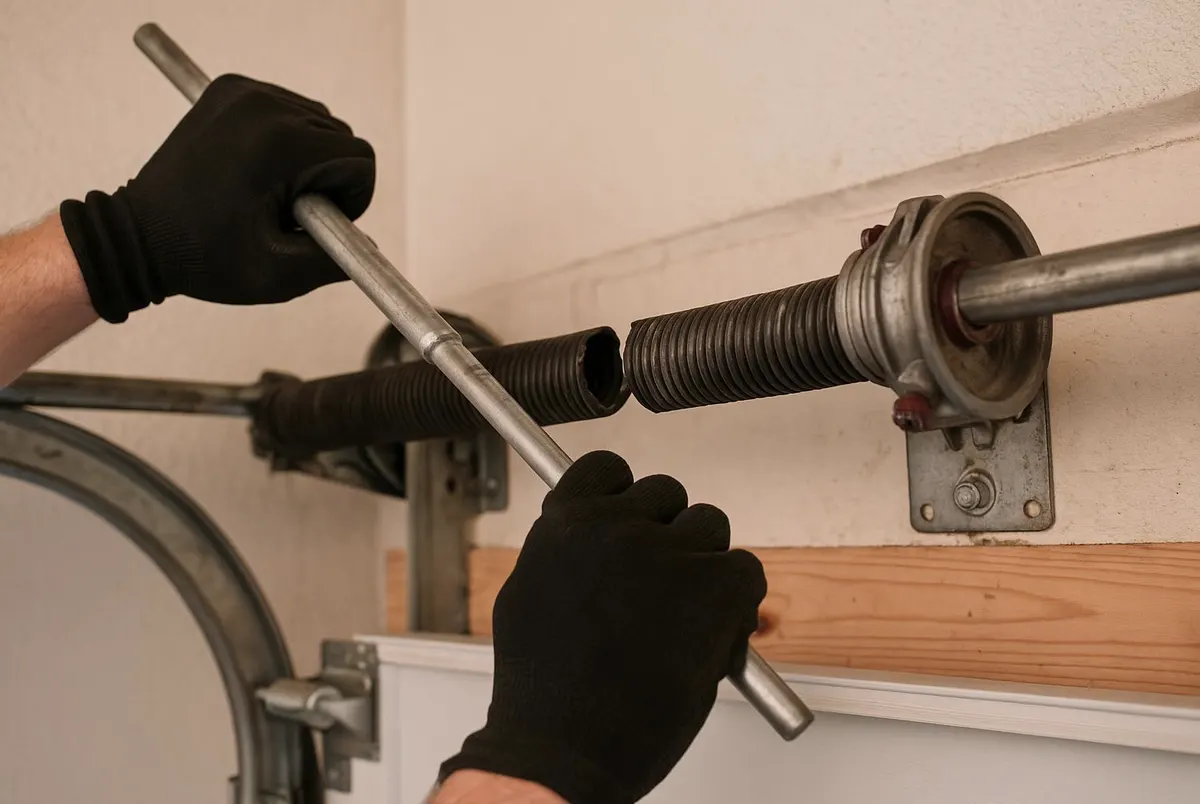
- Springs: Surface rust is common in humid climates, but pitting or visible gaps in the coils mean the spring is weaker than it looks and more likely to snap under sudden load.
- Cables: Frayed strands near the bottom bracket are an early warning sign. A cable that lets go during a windstorm can cause the door to drop unevenly or come off track entirely.
- Weatherstripping and bottom seal: Swollen, cracked, or gapped seals let wind-driven rain push underneath the door. Replacing a worn seal is inexpensive compared to the water damage that follows a leak.
- Panel condition: Run a hand along each panel looking for soft spots, rippling, or seams that have started to separate. Moisture swelling in older doors often shows up here first.
- Opener backup: Power outages are common during storms. If the opener doesn't have battery backup, you may be stuck manually releasing the door at the worst possible time. Know where the manual release cord is before you need it.
- Bracing hardware: If the door isn't already wind-rated, a retrofit bracing kit across the horizontal panels adds real resistance to flex and buckling for a modest cost.
After the Storm Passes
Once the weather clears, don't assume everything's fine just because the door still opens. Walk the track line looking for bent sections or separation from the wall bracket. Listen for new grinding or popping sounds when the door cycles — that's often a bent roller or a track that's been knocked slightly out of alignment. If the door feels heavier than normal or doesn't stay in place when disconnected from the opener, a spring may have lost tension or cracked under the load. These are the kinds of issues that start small and get expensive fast if the door keeps operating under stress.
When to Call Lochloosa Door & Opener
If your door is showing rust on the hardware, a panel that's starting to ripple, or it came through a recent storm with a cable that's frayed or a track that's pulled loose, it's time to get it looked at before the next system rolls through. Our Garage Door Maintenance & Tune-Up service covers the rollers, springs, cables, and hardware that quietly wear down from Florida humidity, catching problems while they're still cheap fixes. If the door has already come off its track or won't move at all, our Off Track Door Repair gets it back on course and checked for bent hardware that could fail again under wind load. We serve Lochloosa, Hawthorne, Island Grove, Cross Creek, Citra, Micanopy, Waldo, and Earleton, and we show up on time with the parts and tools to finish the job in one visit.
Don't wait for the next storm warning to find out your garage door is the weak point in your home. Call Lochloosa Door & Opener today to schedule an inspection or tune-up before severe weather rolls through Lochloosa, FL.