
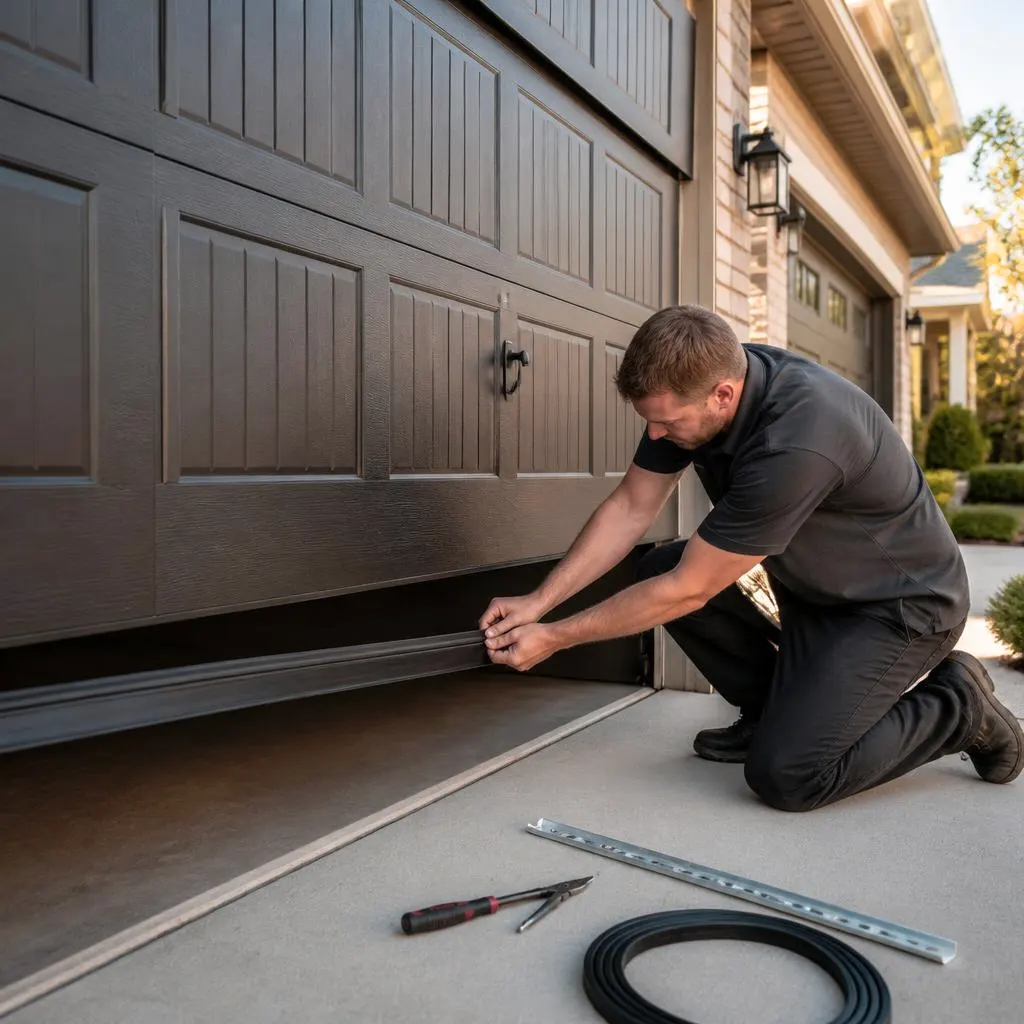
The two places where kids and pets actually get hurt by a garage door are the auto-reverse safety sensors and the springs — and both need a hands-on check at least once a month, not once a year. Most households assume the door is "safe" simply because it has an opener. It isn't automatically. Safety depends on sensors staying aligned, springs staying balanced, and adults treating the door like the heavy machine it is.
What Actually Goes Wrong
Garage door injuries follow a short list of predictable patterns, and none of them require bad luck — just one skipped check.
- The door doesn't reverse. Photo-eye sensors near the floor are supposed to stop and reverse the door if something breaks the beam. If they're misaligned or dirty, a door can close on a child, a dog, or a cat without stopping. This is the single most dangerous failure in a home with kids or pets.
- Fingers get caught between panel sections. As a door closes, the gap between sections pinches shut. Small fingers exploring a moving door at child height are especially at risk, and the injury can be severe enough to need surgery.
- A spring lets go. A broken torsion or extension spring can cause the door to drop suddenly or slam, especially on an older door that's been quietly losing tension for months. A door that's heavier than it should be is a door that's one spring away from a hard, fast fall.
- Pets dart under a closing door. Unlike kids, pets don't always register the door as dangerous. A dog chasing a squirrel or a cat startled by a storm can run under a door that's already most of the way down.
- Kids treat the opener like a toy. Wall buttons within reach, garage remotes left in an unlocked car, or keypad codes that are easy to guess all turn the door into something a child can operate without supervision.
Why Lochloosa's Climate Makes It Worse
Humidity and heat don't just make the garage uncomfortable — they actively work against the safety features built into the door.
Photo-eye sensors sit low, near the floor, which is exactly where moisture collects after an afternoon downpour. Swelling in wood jambs or shifting in the slab can nudge sensor brackets out of alignment by just enough to create a blind spot the door doesn't recognize. Salt-tinged air and general humidity also accelerate rust on spring coils and hardware, which changes how a spring wears and how predictably it fails. And after hurricane-season storms, tracks can get knocked slightly out of true even if the door still looks fine — which affects how smoothly and safely it travels, including whether the auto-reverse actually engages the way it should.
None of this means the door is unsafe by design. It means the safety margin shrinks quietly, in ways you won't notice just by looking at the door from across the garage.
The Monthly Safety Check Every Household Should Do
This takes about five minutes and catches the failures above before they turn into an injury.
- Test the auto-reverse. Place a wood block or a paper towel roll on the ground where the door closes. Run the door down. It should stop and reverse the instant it touches the object. If it doesn't, stop using the opener until it's fixed.
- Check the photo-eye sensors. Wipe both lenses clean and confirm the small indicator lights are solid, not blinking. Blinking usually means misalignment.
- Watch the door's balance. Disconnect the opener (pull the release cord) and lift the door halfway by hand. It should stay in place on its own. If it drifts up or crashes down, the springs are out of balance and the door is not safe to operate normally.
- Look at the panel gaps. Run a hand near — not inside — the sections while the door moves slowly. If you'd worry about a toddler's fingers there, teach kids to stay clear of that zone entirely.
- Check rust and corrosion on springs and hardware. Surface rust after a humid stretch is common; flaking, pitting, or a spring that looks thinner in spots is not — that's a sign of weakening material.
Habits That Prevent Tragedies
Hardware only gets you halfway there. The rest is household habit.
- Keep wall-mounted opener buttons out of reach of small children, or add a cover guard.
- Never let kids or pets play in the path of a moving door, even "just for a second."
- Store remotes out of unlocked vehicles, and set keypad codes that aren't a birthday or house number.
- Treat a door that reverses unpredictably, closes crooked, or makes a new grinding or popping sound as an emergency, not an inconvenience.
- After any major storm, do a full check of sensors, tracks, and balance before assuming everything's fine.
When to Call Lochloosa Door & Opener
If your auto-reverse test fails, if the door feels heavier than it used to, or if you're noticing rust on the springs or hardware, that's the point to call rather than troubleshoot further yourself. Our Garage Door Maintenance & Tune-Up service covers exactly this: sensor alignment, spring tension, track inspection, and hardware condition, all checked against how Lochloosa's humidity and storm season wear on a door over time. If a spring has already failed or is visibly corroded, our Garage Door Spring Repair team replaces it with the correct weight-rated spring for your door, done safely and correctly the first time — this is not a DIY repair with kids or pets in the house.
If something about your door's safety behavior concerns you, don't wait for it to get worse. Call Lochloosa Door & Opener today and let us check it out for your family in Lochloosa, FL.